Embeddings Explained Without the Math
An embedding is a way to turn words - or sounds, or images - into a list of numbers. That is the whole idea. The rest is just details about how those numbers are calculated.
The map analogy
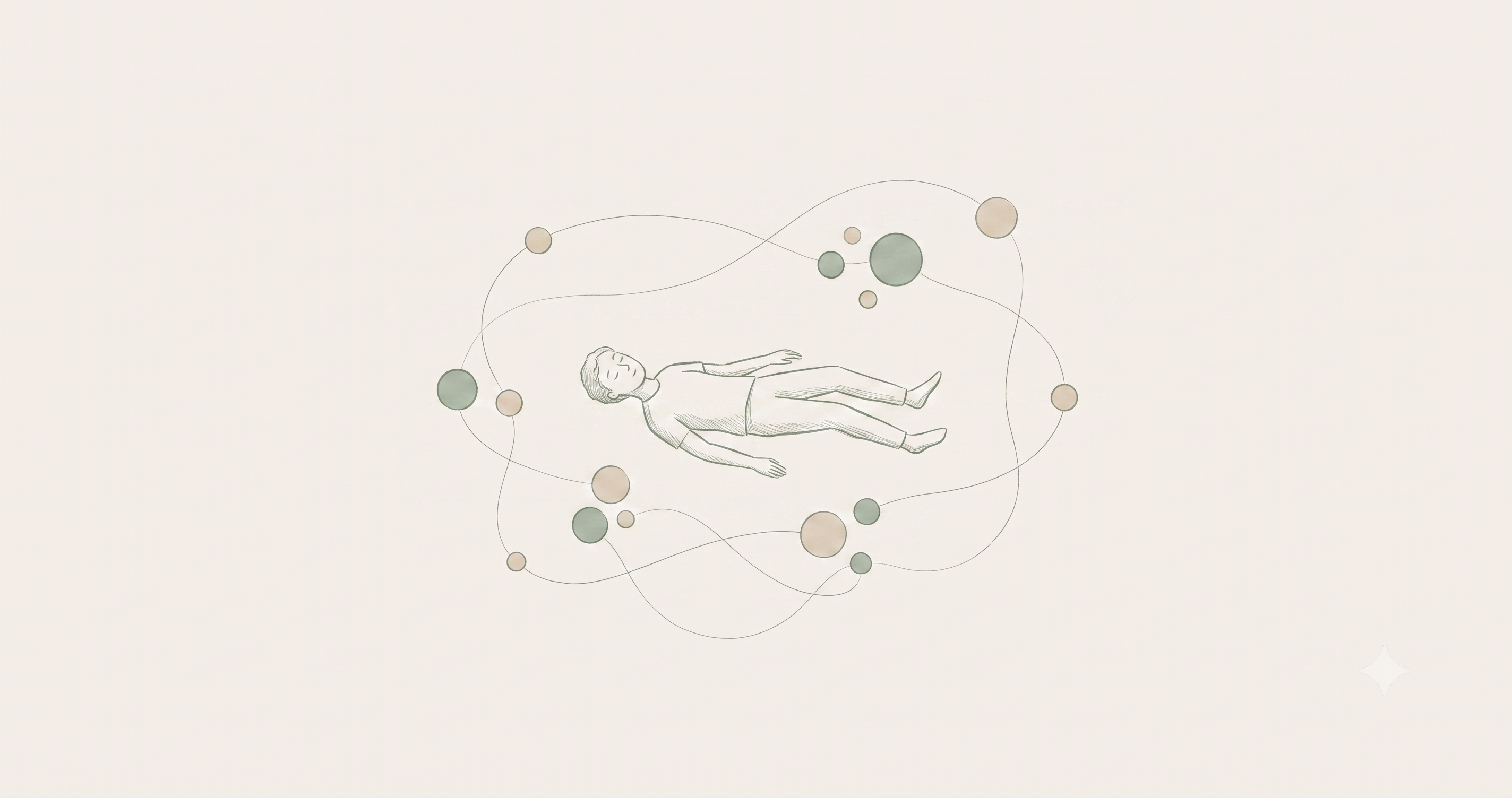
Imagine every word in English has a coordinate on a map. Related words cluster together. Unrelated words sit far apart.
- "cat" and "dog" are close (both pets)
- "cat" and "car" are far apart (different categories)
- "happy" and "joyful" are nearly the same point (same meaning)
- "happy" and "sad" are on opposite ends
Those coordinates are the embedding. A good embedding captures meaning, not spelling.
How speech recognition uses embeddings
When you speak into floure, your voice goes through several transformations:
- The microphone produces a waveform - air pressure over time
- The waveform is divided into 30-millisecond frames
- Each frame is converted into an embedding - 80 numbers describing the acoustic features of that moment
- The Whisper model reads the sequence of embeddings and predicts which words they represent
The model does not hear sound. It reads embedding sequences and matches them against patterns learned during training.
The numbers
- Whisper uses 80-dimensional embeddings (80 numbers per 30ms audio frame)
- These numbers capture frequency patterns, harmonic structure, and timing
- Similar phonemes produce similar embeddings: "pa" and "ba" are close, "pa" and "zz" are far apart
- The model learned these patterns from 680,000 hours of audio - about 77 years of continuous speech
The choice of 80 dimensions is not arbitrary. Lower dimensions (32 or 64) lose too much information. Higher dimensions (128 or 256) add compute cost with marginal accuracy gain. 80 is the practical sweet spot.
Why embeddings matter
Embedding quality determines transcription quality. Good embeddings preserve the features that distinguish one word from another. Bad embeddings lose information.
Whisper's embeddings handle accents, background noise, different microphones, and varying speaking speeds. That is why floure's local transcription matches cloud services in accuracy - the embeddings do the work, and they do not care whether the model runs on your laptop or a server farm.
Embeddings are not magic. They are a practical way to represent sound as numbers. The better the representation, the better the transcription.